From Stockholm to Trinidad: The UNICEF Chapter That Shaped Kolektivo
In 2023, Kolektivo Network, in collaboration with Zed Labs, was selected as one of eight teams — out of more than 400 startups globally — to join the UNICEF Venture Fund's first Climate Tech Cohort, building open-source technology for climate action.
The selection came on the momentum of the 2022 Kolektivo Festival and four years of groundwork on Curaçao, documented in our Impact Report 2022. It was a milestone — and one of the most instructive chapters in Kolektivo's history, the cycle in which we laid the foundation everything since has been built on. This is what happened, and what we took from it.
UNICEF Venture Fund on the Kolektivo journey — watch on YouTube.
The bet we made
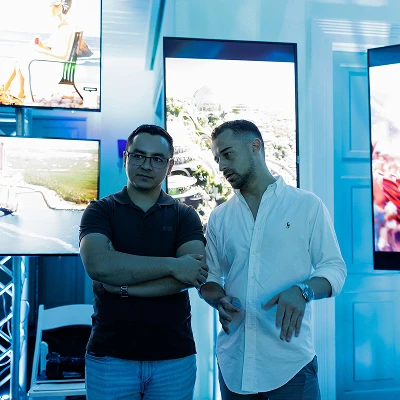
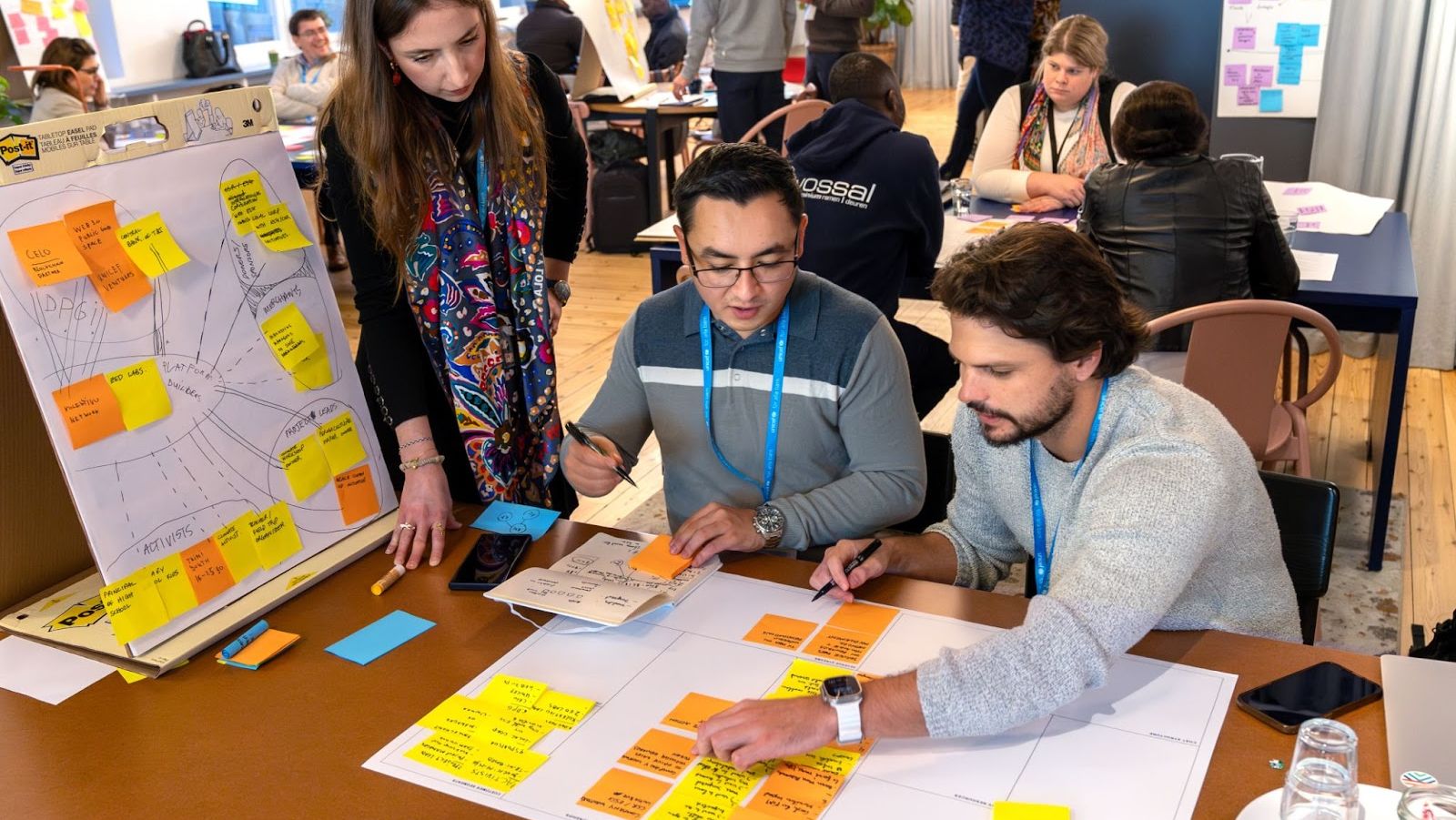
The cohort came with funding, technical assistance, and a one-year work plan built alongside a UNICEF Venture Fund mentor. Mark Pereira, founder of Zed Labs and lead of Kolektivo Trinidad, and Luuk Weber, founder of Kolektivo Labs, kicked things off at the UNICEF Office of Innovation in Stockholm — four days of mentorship, workshops, and connecting with fellow cohort teams committed to building digital public goods with frontier technologies.
Mapping the Kolektivo ecosystem — platform builders, merchants, activists, and project leads — during the cohort kick-off in Stockholm.
Our thesis was simple: tech-enabled local action is the most equitable and efficient way to reverse environmental degradation, because most global challenges are rooted in a disconnect between people and the world around them. The shift happens when communities become part of the solution in a way that compounds their own capacity over time.
What we built
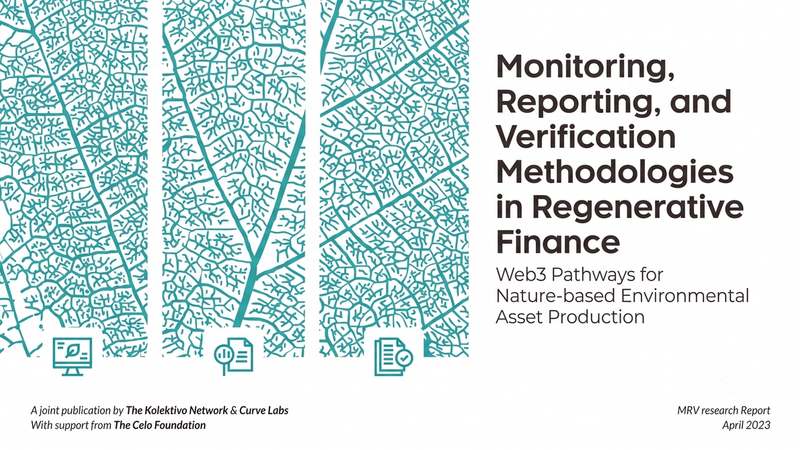
Building on four years of pilots in Curaçao and the latest Web3 innovations, we developed the Kolektivo platform into a working MVP on the Celo blockchain — carbon-negative, mobile-first, open source. In parallel, our research track published MRV Methodologies in Regenerative Finance (2023), mapping how impact verification could work for small-scale, community-led projects — research that informed the platform's impact-tracking design and still underpins our crediting work today.
The mechanics: citizens joined their local community and browsed impact activities organized by local NGOs. Workshops unlocked skills, tracked through in-app badges. Participating in impact activities earned community points — spendable at local vendors — and skill points to level up badges. On the other side, corporations, governments, and local businesses became Impact Partners: they gained visibility into how impact was generated and how resources flowed, and could accept community points as payment. Funders and changemakers, closer together, with more trust and more trade between them.
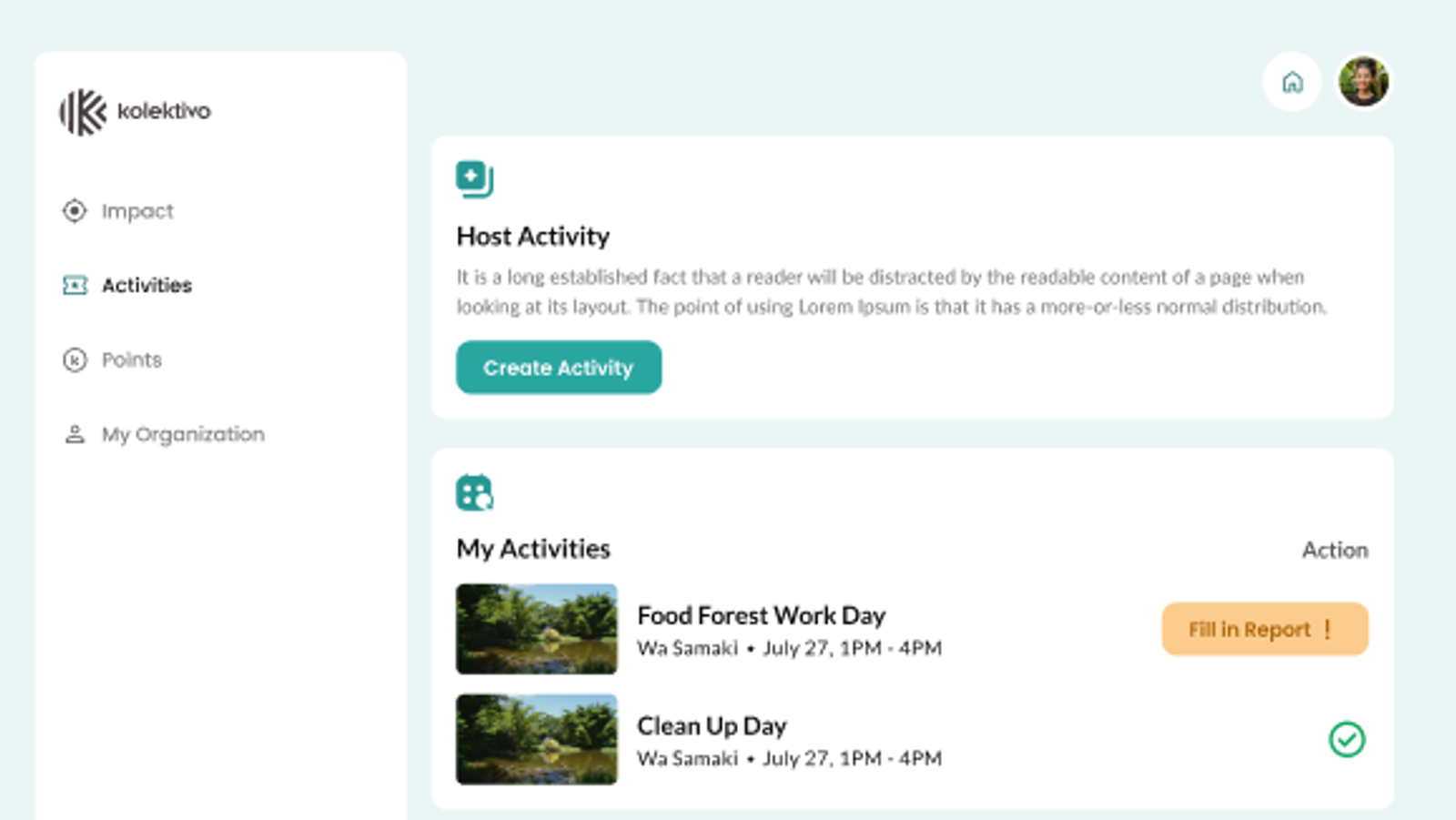
The Kolektivo MVP: Impact Partners hosted activities like Food Forest Work Days and Clean Up Days, tracked participation, and filed impact reports — all from one dashboard.
What we proved
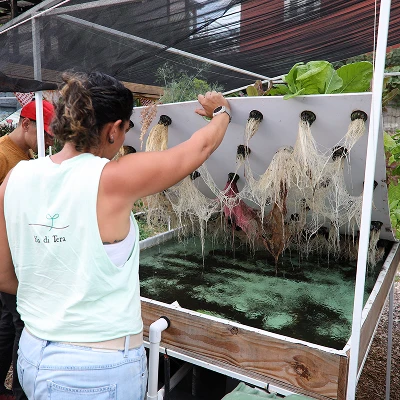
We closed the MVP with a successful pilot in Trinidad and Tobago, where dozens of high-school teens received syntropic agriculture training and contributed to local regenerative food production — earning badges and community points they spent at vendors around their schools. In parallel, Kolektivo Curaçao ran impact tracks with the Johannes Bosco Foundation, Active Chance, and Kaya Kaya, building on years of community groundwork.
The core loop worked. Young people showed up, learned real regenerative skills, and got recognized and rewarded for it. Local vendors accepted community points. The theory — recognize and reward actions that create prosperity for people and nature — held up in the field.
What we internalized
Every cycle produces insights, and internalizing them is how the next cycle starts stronger. These are the ones that shaped what came next.
Recognition motivates; infrastructure sustains.
Badges and points got teens through the door. What kept anything alive afterwards was local champions, ongoing programming, and vendors who stayed engaged. Technology amplified community capacity — it never substituted for it.
A community currency is only as strong as its economy.
Points circulate when there is a dense network of places to spend them and reasons to earn them. A handful of vendors around a school worked; scaling that loop demands real economic gravity, not just goodwill.
Web3 was the right rails and the wrong front door.
Building open source on Celo gave us global, carbon-negative infrastructure. But every layer of wallet friction cost us participants. The blockchain had to disappear into the background for the community to move forward.
Grants launch pilots; economies compound.
Our deepest insight. Grant-funded impact coordination can prove a model, but it cannot compound. Communities become self-sufficient and sovereign when value creation is owned locally and profits circulate — not when the next funding cycle arrives.
Small islands are a superpower.
The speed at which we could design, deploy, and iterate at island scale — with tight feedback loops between builders, schools, vendors, and NGOs — is something continental programs can't match. We stopped seeing small scale as a constraint and started seeing it as our competitive advantage.
Where it led us
The UNICEF Venture Fund chapter gave us proof that Caribbean communities will organize around shared prosperity when the tools respect their agency. It also showed us exactly where the model needed to evolve.
So we took the lessons and kept building. If recognition needs an economy behind it, build the economy. If grants can't compound, mobilize capital that can. If small scale means speed, treat the islands as the laboratory they are.
That thinking became the foundation of what Kolektivo is today: a Dutch Caribbean impact network focused on growing the collective pie — connecting the region's talent and diaspora capital to private-sector-led innovation, investment, and knowledge transfer.
The pilot ended. The mission accelerated.